
Dog Gut Health: What Poo Quality Can Tell You

It may not be the most glamorous subject, but your dog's poo is one of the simplest day-to-day clues about their health. A change in poo quality can be caused by something as straightforward as a new treat, excitement or a sudden diet change, but it can also be an early sign that your dog is unwell.
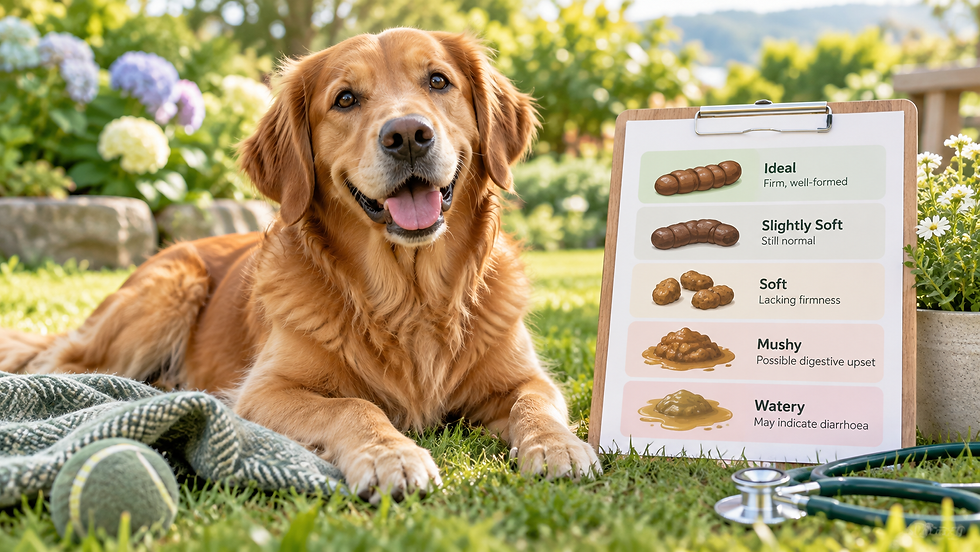
At Woofland, we watch each dog's appetite, energy, toilet habits and general behaviour. These small observations help us notice changes early and keep owners informed.
What does healthy poo look like?
Healthy poo is usually well formed and easy to pick up, consistent with your dog's usual routine, neither very dry and hard nor soft and messy, and free from visible blood or large amounts of mucus.
One unusual poo does not always mean there is a serious problem. Look at the wider picture: Is your dog still eating, drinking, playing and behaving normally? Has there been a recent change to food, treats, exercise or routine?
Common reasons for loose poo
Dogs can develop soft poo or diarrhoea for several reasons, including a sudden food change, too many rich treats or unfamiliar food, stress or excitement, eating something they should not have, parasites, infection or an underlying medical condition.
Consistency is one of the best forms of prevention. Keep your dog on their normal food where possible, introduce diet changes gradually and avoid sending a large range of new treats with them for a boarding stay.
Gut health during daycare and boarding
Daycare and boarding can be exciting, especially for social dogs. That excitement can sometimes affect the gut. Bringing your dog's usual food, following their normal feeding routine and avoiding last-minute diet changes can make a real difference.
If your dog has a sensitive stomach, speak with the Woofland team before their stay. Clear feeding instructions and any vet-recommended gut-support plan help us provide consistent care.

When should you contact your vet?
Contact your vet promptly if loose poo continues for more than a day or two, or sooner if your dog also has blood or significant mucus in their poo, vomiting, reduced appetite or refusal to eat, lethargy, pain, a marked change in behaviour, or signs of dehydration.
When in doubt, ask early. A quick conversation with your vet can prevent a small tummy upset from becoming a bigger problem.


Comments